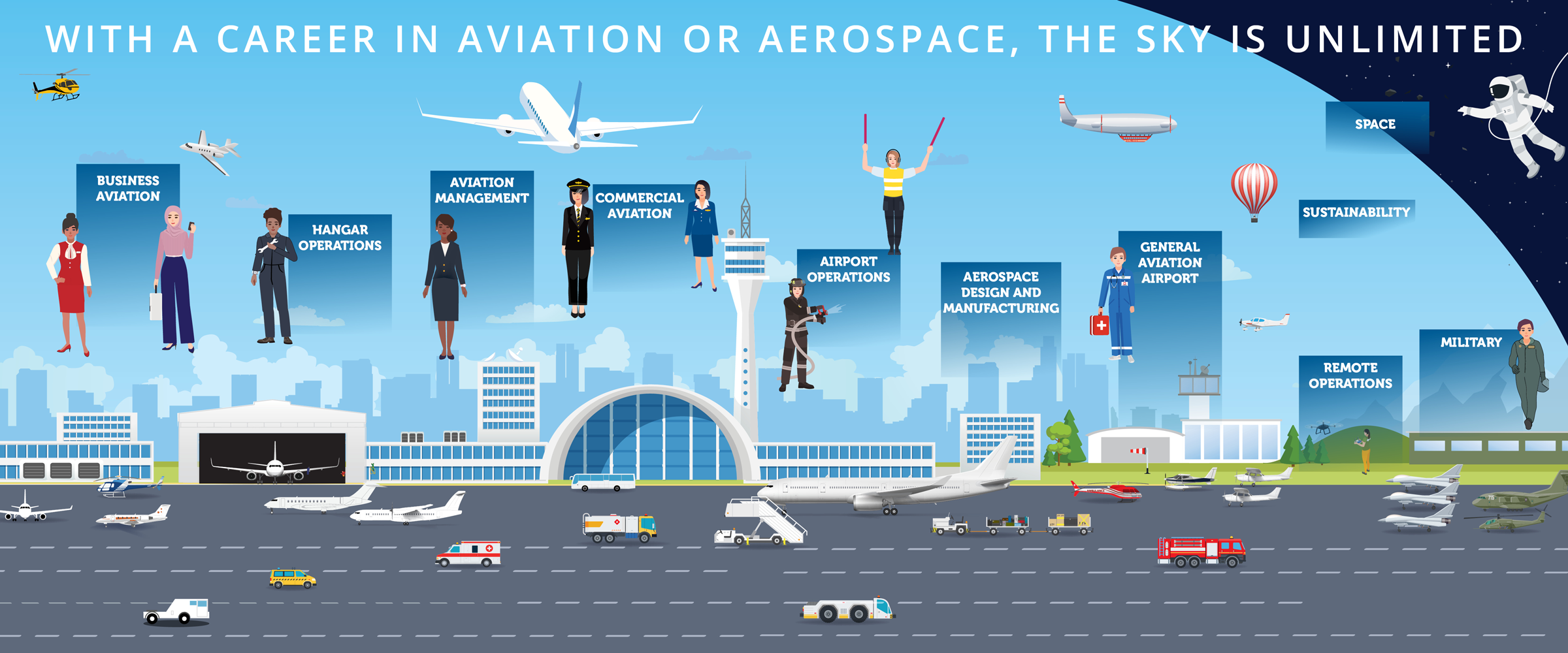
Aviation is a field that captures the imagination of many. Whether it’s the thrill of flying, the excitement of working with advanced technology, or the sense of being part of something bigger, aviation offers a variety of career paths that go beyond the traditional image of a pilot. From engineers and air traffic controllers to cabin crew and maintenance technicians, the aviation industry is full of opportunities for those passionate about flight. In this article, we’ll explore some of the most exciting careers in aviation, the skills needed, and how to get started on your journey.
Note: This list is not exhaustive—aviation is a diverse industry with many other roles that might suit your skills and interests. However, these are some of the most well-known and impactful careers to get you inspired!
1. Pilot
The Dream Job: For many, becoming a pilot is the ultimate goal. Pilots are responsible for flying aircraft safely from one destination to another, whether it’s a small private plane, a commercial jet, or a military aircraft.
How to Become One: To become a commercial pilot, you’ll (in most cases) need to start with a Private Pilot License (PPL) before moving on to a Commercial Pilot License (CPL) and, eventually, an Airline Transport Pilot License (ATPL). Flight school, simulator training, and accumulating flying hours are essential steps.
Key Skills: Strong communication, decision-making, problem-solving, and the ability to remain calm under pressure.
2. Aircraft Maintenance Engineer (AME)
The Behind-the-Scenes Expert: Aircraft Maintenance Engineers are the unsung heroes of aviation. They ensure that every aircraft is airworthy before it leaves the ground. AMEs perform routine maintenance, troubleshoot technical problems, and repair aircraft components.
How to Become One: Most AMEs start with a relevant degree or diploma in aviation maintenance technology. After completing your education, you’ll need to gain hands-on experience and obtain certification from aviation authorities.
Key Skills: Attention to detail, technical skills, and the ability to work under tight deadlines.
3. Air Traffic Controller (ATC)
The Masters of the Sky: Air Traffic Controllers are responsible for managing the flow of aircraft in the sky and on the ground. They ensure safe distances between planes, coordinate takeoffs and landings, and guide pilots during challenging weather conditions.
How to Become One: ATCs need specialized training from an accredited program, which usually includes simulations and on-the-job training. You must also pass medical exams and demonstrate excellent communication and problem-solving skills.
Key Skills: Multitasking, quick decision-making, and excellent communication skills.
4. Flight Dispatcher
The Flight Planner: Flight Dispatchers work alongside pilots to plan flight paths, considering factors like weather, fuel efficiency, and air traffic. They play a crucial role in flight safety and are often considered the pilots on the ground.
How to Become One: You’ll need specific training and certification, often through a flight dispatcher course, which includes learning about weather analysis, fuel planning, and aviation regulations.
Key Skills: Analytical thinking, teamwork, and a deep understanding of aviation operations.
5. Cabin Crew
The Faces of Hospitality: Cabin crew members are more than just the friendly faces who serve you drinks on a flight. They are trained professionals responsible for passenger safety, comfort, and emergency response.
How to Become One: Airlines typically provide training programs for cabin crew. Requirements often include a high school diploma, good physical health, and strong interpersonal skills.
Key Skills: Customer service, communication, and emergency response.
6. Aerospace Engineer
The Innovators: Aerospace engineers design and develop aircraft, spacecraft, and related systems. They work on everything from improving aerodynamics to designing more fuel-efficient engines.
How to Become One: A degree in aerospace or mechanical engineering is usually required, followed by specialized training in aviation technologies.
Key Skills: Creativity, technical expertise, and a passion for innovation.
Tips for Getting Started in Aviation
- Educate Yourself: Research various careers and find the one that best matches your interests and skills. Aviation schools, universities, and online courses offer many opportunities to learn more.
- Network: Attend aviation events, join clubs, and connect with professionals in the field. Networking can provide valuable insights and open doors to job opportunities.
- Stay Motivated: The path to a career in aviation can be demanding, but persistence is key. Set clear goals and stay committed to achieving them.
- Stay Updated: Aviation is a fast-evolving industry with constant technological advancements. Stay informed about the latest trends and developments.
Final Thoughts
A career in aviation is more than just a job; it’s a passion. Whether you’re on the ground, in the air, or behind the scenes, every role plays a crucial part in the smooth functioning of this incredible industry. With the right training, dedication, and a love for flight, you can find your place in the world of aviation.
If you would like to see other careers covered or one of these in more detail, feel free to get in touch with me trough the contact form and let me know!